



© 2025 Onward. All rights reserved.
Designed by BX Studio


Onward helps teams optimize paid marketing ROI by integrating ad, web, and revenue data into a single source of truth, then using those signals to change bidding and budgets. This matters because most ROI “wins” are just measurement artifacts when Meta, Google, GA4, and your CRM disagree. The biggest risk is integrating data without profit logic, then scaling spend based on clean dashboards that still hide the truth.
This is for ecommerce and service brands that want marketing spend tied to real outcomes. It is also for teams that feel stuck optimizing ROAS, CPL, or platform conversions. The caveat is that data integration only improves ROI if it feeds a faster decision loop, not just better reporting.
Key facts
ROI is not a platform metric. ROI is a business metric.
Platforms report conversions based on their own attribution rules and event visibility. Your finance system reports cash. Your CRM reports pipeline and closed revenue. Those numbers rarely match.
When they do not match, teams do one of two things.
They optimize to what they can see quickly, like ROAS, CPA, or leads. Or they freeze because nobody trusts the numbers.
This is why Onward treats data integration as a prerequisite for performance marketing. We do not separate “analytics” from “growth.” We connect them.
Most teams try to improve ROI by changing creative, audiences, or landing pages.
Those levers matter. But they work best after you fix measurement and outcome signals.
Onward builds a closed loop:
A client described what changes when teams stop debating metrics and start acting on shared truth.
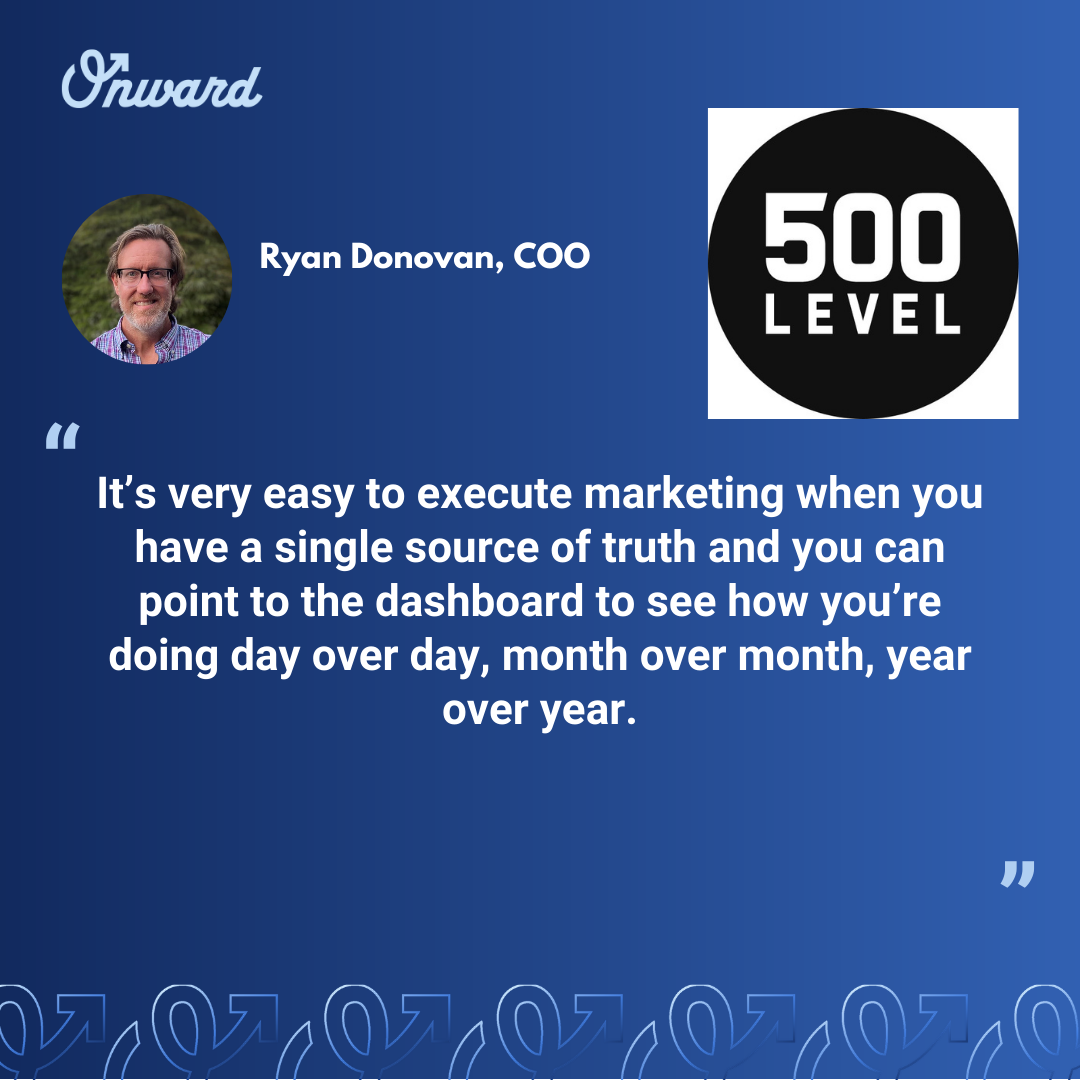
That is the goal of ROI optimization through integration. Faster decisions with less noise.
This is the base layer. It is where you unify source data from ad platforms, ecommerce, CRM, and cost systems.
A warehouse style layer is designed for analytics and consistent business definitions. Lakehouse approaches can bring warehousing capabilities to data stored in a lake-like layer
What this enables:
What it does not do by itself:
If your “conversion” happens after a form fill, phone call, quote, or sales cycle, you need offline conversion tracking.
Google Ads supports importing offline conversions using the Google Click ID (GCLID). This lets you connect a click to downstream outcomes that happen later.
Use cases that impact ROI fast:
This changes ROI because the platform learns what turns into money, not what turns into form fills.
Offline conversion imports can fail quietly when match rates are low.
Enhanced conversions for leads is described by Google as an upgraded version of offline conversion import that uses hashed, user-provided data to improve accuracy and bidding performance (Google Ads Help, 2026: https://support.google.com/google-ads/answer/15713840).
Google also publishes an implementation checklist that recommends keeping the new enhanced conversions action set to secondary for the first 2 to 3 weeks during validation
This matters for ROI because bad attribution yields bad optimization. Better match quality usually leads to better bidding decisions.
Browser tracking has limits. Ad blockers and privacy changes reduce event reliability.
When you integrate CAPI well, you can:
This is not just “tracking hygiene.” It is an ROI lever because signal quality affects optimization.
Most ROI failures are margin failures.
If your stack integrates revenue but ignores:
Then your “ROI” is often inflated.
The practical solution is a profit model in the warehouse. At Onward, we usually use contribution margin logic so media decisions reflect what you keep, not what you collect.
Dashboards are not the solution. Decision speed is the solution.
A useful ROI dashboard answers:
If your dashboard cannot drive a same-day decision, it is a reporting artifact.
Integration fails when teams unify data but do not unify definitions.
Integration also fails when the output is only visibility, not a control loop back into bidding.
The most common failure modes:
If your system only works when everything is calm, it will not work when spend scales.
The strongest solutions combine a central warehouse or lakehouse with conversion integrations that send real outcomes back to ad platforms. For Google Ads, that includes offline conversion imports using GCLID and enhanced conversions for leads to improve match quality (
Capture identifiers, unify CRM or order outcomes, and import those outcomes into ad platforms as conversions. This trains bidding on revenue events rather than top-of-funnel proxies. Google documents offline conversion imports and positions enhanced conversions for leads as an upgrade for accuracy and bidding performance
It can, if it improves event quality and attribution stability. Meta’s Conversions API connects server-side marketing data to Meta for measurement and optimization, which can support better targeting and lower cost per action when signals are cleaner.
What is the biggest mistake teams make when integrating data?
They integrate revenue but not cost, or they build dashboards without building feedback loops. That leads to ROAS optimization instead of ROI optimization. If you cannot measure contribution margin, you cannot make profit-aware scaling decisions.
If you already have clean tracking, you can often see directional impact within 30 to 60 days once offline conversions and profit models are live. If your CRM stages and identifiers are messy, expect 60 to 90 days to stabilize match rates and decision workflows.



.svg)
