



© 2025 Onward. All rights reserved.
Designed by BX Studio


A small business gets more customers beyond word of mouth by showing up in the places strangers already look for what it sells: Google search and Maps, review sites, social feeds, and AI assistants. The most dependable approach is to make referrals repeatable, become easy to find for high-intent searches, and then add paid channels you can measure against real sales.
Word of mouth is often the best customer source a small business has. Its limit is that you cannot turn it up when you need more work.
Word of mouth stalls because it depends on people who already know you. Each happy customer tells a few friends, but those friends mostly live in the same neighborhoods, work in the same industries, and run in the same circles. Growth slows once that network is saturated.
It is also hard to plan around. Referrals arrive in bursts, you rarely know which customer sent them, and a slow month gives you no lever to pull. Moving beyond word of mouth is less about replacing it and more about adding channels that reach people outside your existing network, on a schedule you control. For most small businesses, that means a mix of local search visibility, reviews, and Google and Meta ads management that can be dialed up or down as the calendar fills.

Five channels consistently bring in customers who have never heard of a business. Most small businesses should start with the first two and add the rest as budget allows.
Before chasing strangers, get more out of the customers you have. Ask for a referral at the moment of highest satisfaction, such as right after a finished project or a five-star review. Give people something easy to forward, like a short link or a card. A simple incentive for both sides, such as a credit on the next order, often helps. Track every referral by name so you know which customers send business and can thank them.
When someone types "dentist near me" or "catering for 50 people," they are ready to buy. Being visible for those searches is the closest thing to word of mouth from a stranger. The essentials:
Organic visibility takes months to build. Paid search can put you at the top of results for your most valuable terms the week you launch. Start narrow: a handful of services, a tight radius, and keywords that signal intent to buy rather than research. Careful setup matters most here, because loose targeting can spend a small budget on clicks that were never going to convert.
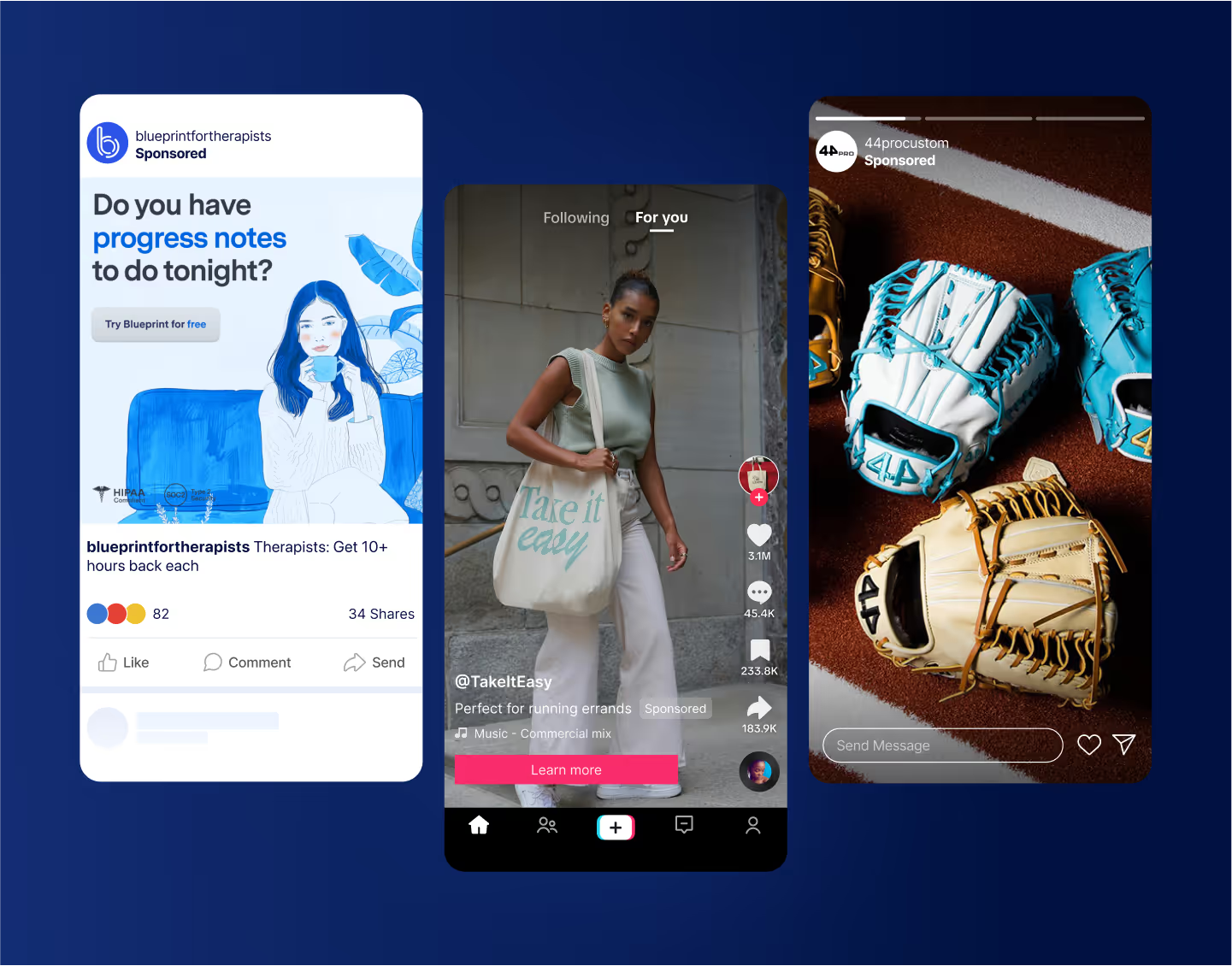
Search captures people already looking. Social ads on Facebook, Instagram, or TikTok reach people who were not looking yet but match your ideal customer. This works especially well for products with visual appeal, local experiences, and offers people did not know existed. Short videos showing real work, real customers, or a clear before-and-after tend to outperform polished brand ads. The benefits of social media marketing come from testing many creative ideas quickly and keeping only the ones that produce sales.
Many buyers now ask assistants such as ChatGPT, Perplexity, or Gemini to suggest a provider, especially for higher-ticket services. Assistants tend to name businesses with consistent information across the web, strong reviews, and clear pages that answer common questions. For businesses where one customer is worth thousands of dollars, AI search visibility services can track whether you are named for the prompts your buyers use.
Pick based on how your customers make the decision. A few common patterns:
Two channels done well beat five done poorly. Give each new channel 60 to 90 days with a fixed budget before judging it.
You know a channel is working when it produces customers at a cost the business can afford after product and delivery costs. Clicks, likes, and impressions do not tell you that on their own. Three habits make the answer visible:
A monthly review of those numbers is enough for most small businesses. Moving budget toward the channels with the lowest cost per customer, as described in these strategies to improve marketing efficiency, keeps growth from depending on guesswork.
Reaching new customers at scale is possible without giving up profitability. 500 LEVEL, a DTC licensed sports apparel brand, nearly tripled its new customers, from 6,900 to 19,000 compared with the prior year, using profit-first paid acquisition, as detailed in nearly 3x new customers for a DTC apparel brand. Most small businesses start far smaller, but the principle holds: new customers come from channels you can measure and adjust.
Base it on the profit a typical customer generates. For example, if a new customer brings in $400 in profit over their first year, spending $100 to $150 to acquire one can make sense. Start with a test budget you can afford to lose while you learn.
Organic posting is free in dollars but costly in time, and its reach to new audiences is limited. Most businesses use organic posts to build trust with existing followers and paid social to reach new people.
Paid search and paid social can produce customers within weeks. Reviews, SEO, and AI visibility usually take months but keep working without per-click costs.
Keep word of mouth, and make it more deliberate. Then add channels that reach people outside your network: search visibility for buyers who are ready, paid social for buyers who are not looking yet, and AI visibility for considered purchases. Measure each on new customers and cost, not clicks. If you want help choosing where to start, talk to Onward's team.


.svg)
