



© 2025 Onward. All rights reserved.
Designed by BX Studio


Start with Google Ads if people already search for what you sell. Start with Facebook and Instagram ads if they do not search for it yet but would want it once they see it. Google captures demand that exists; Meta creates demand by putting your product in front of people who were not looking. For most small businesses, the right first channel is the one that matches how customers find you today, funded well enough to learn, before adding a second.
This guide gives four questions to decide, a quick read by business type, and what to watch in the first 60 days.
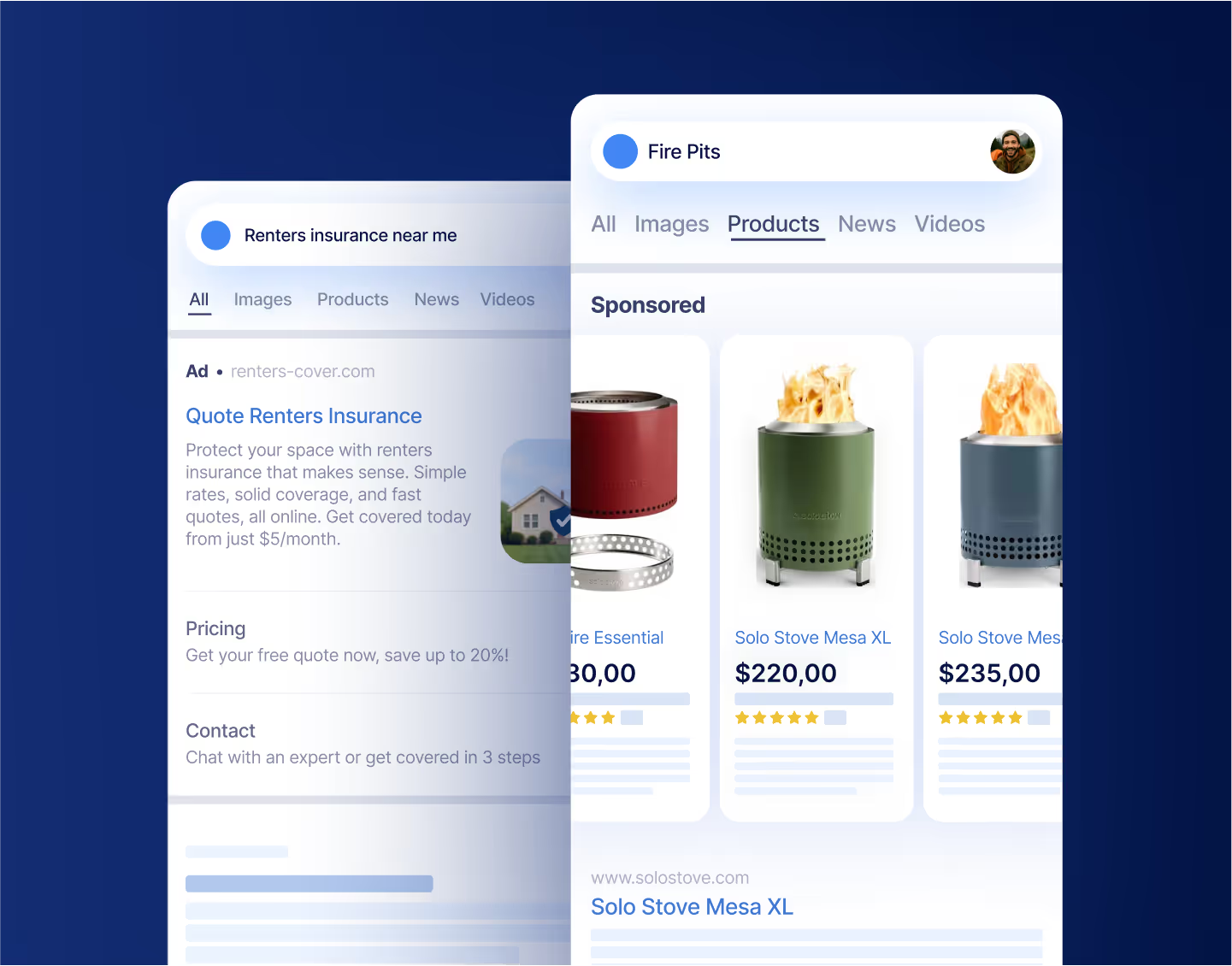
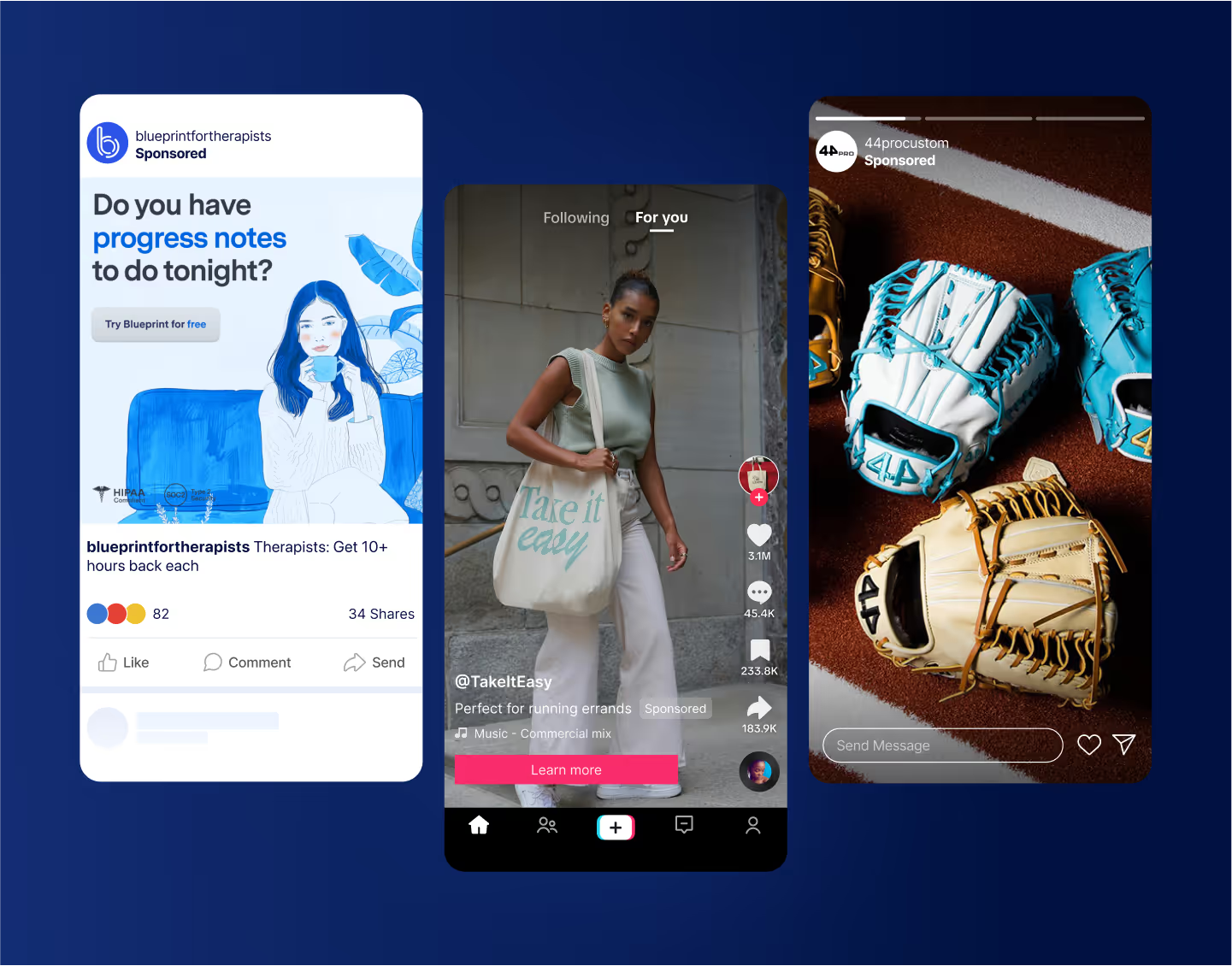
Google Search ads show up when someone types a query, so you pay to meet intent that already exists. Meta ads show up in feeds and stories on Facebook and Instagram, so you pay to interrupt someone with an offer they did not ask for. That difference shapes almost everything else.
Both can be run well or badly, which is why the channel decision matters less than the discipline behind it. An experienced team offering performance marketing services should be able to explain which one fits your business before asking for budget.
Answer these four questions in order. The first clear answer usually decides it.
Use this as a starting point, not a rule:
Two hypothetical examples: a two-truck plumbing company checks Keyword Planner and sees steady searches for "emergency plumber" plus its city. Those people need help today, so Google Search gets the first budget, with ads running during hours someone can answer the phone. A new hand-poured candle brand finds almost nobody searching for it, but its products photograph well and make easy gifts, so Meta gets the first budget, split across three or four creative concepts to see which one earns attention.
Usually not at first. Both platforms rely on automated bidding that improves as it collects conversion data, and a budget split thinly across two channels gives each less data to learn from. On Meta in particular, ad sets go through a learning phase and need a steady flow of results before delivery stabilizes.
Concentrate the first 60 to 90 days on one channel, reach a clear read on cost per new customer, and add the second when the first is stable or has hit a ceiling. Social tends to earn its place once you have creative that works, as covered in turning social media attention into profit.
Measure each channel against the same backend numbers: new customers or qualified leads counted in your store or CRM, cost per new customer, and contribution margin after marketing. Platform-reported ROAS will look different on each platform because each uses its own attribution, so comparing them directly can send budget the wrong way. That is the core argument in contribution margin vs. ROAS.
On Meta, also track how quickly new creative wears out. Porter, a SaaS company, grew qualified studios 77% and cut cost per qualified studio 47% after moving to structured Meta creative testing, as shown in this Meta creative testing case study.
Pick the channel that matches how customers already find businesses like yours, fund it enough to learn, and judge it on new customers and margin. Add the second channel when the first is working. If you want help making the call for your business, talk to Onward's team.


.svg)
