Improve your website first if it converts poorly, loads slowly, or cannot be measured reliably. Increase your ad budget first only when the site already turns visitors into customers at a cost your margins can support and your campaigns are visibly limited by spend. Ad budget is a multiplier: it scales whatever your website already does, including its leaks.
Key takeaways
More budget buys more traffic, not a better conversion rate. If the site converts at 1%, doubling spend roughly doubles the waste along with the sales.
Extra spend usually gets more expensive per customer, because each new dollar reaches less-qualified audiences. Conversion improvements lower the cost of every customer, including the ones you already buy.
The right comparison is marginal: what will the next $5,000 in ads return versus what a conversion fix would return, measured in contribution margin rather than platform ROAS.
If you cannot trust your conversion data, fix measurement before either decision.
Why does the order matter?
The order matters because ad spend and conversion rate multiply each other. Customers acquired equal clicks times conversion rate, so a weak site caps the value of every dollar you add on the ad side. That is why margin-focused paid media treats the landing page as part of the campaign, not as a separate project.
A hypothetical example, for illustration: an ecommerce brand spends $10,000 a month at a $5 cost per click, buys 2,000 clicks, and converts 1.5% of them. That is 30 orders and a customer acquisition cost (CAC) of about $333.
Option A, double the budget. Spend rises to $20,000, but cost per click climbs to roughly $5.50 as campaigns reach colder audiences. About 3,600 clicks at the same 1.5% conversion rate produce 54 orders. CAC rises to about $370.
Option B, fix the site. Spend stays at $10,000. Faster mobile pages and a shorter checkout lift conversion to 2.25%. The same 2,000 clicks produce 45 orders, and CAC falls to about $222.
Option A buys more customers. Option B buys cheaper ones. Which one is right depends on whether a $370 customer is still profitable for this business, and that question can only be answered with margin data.
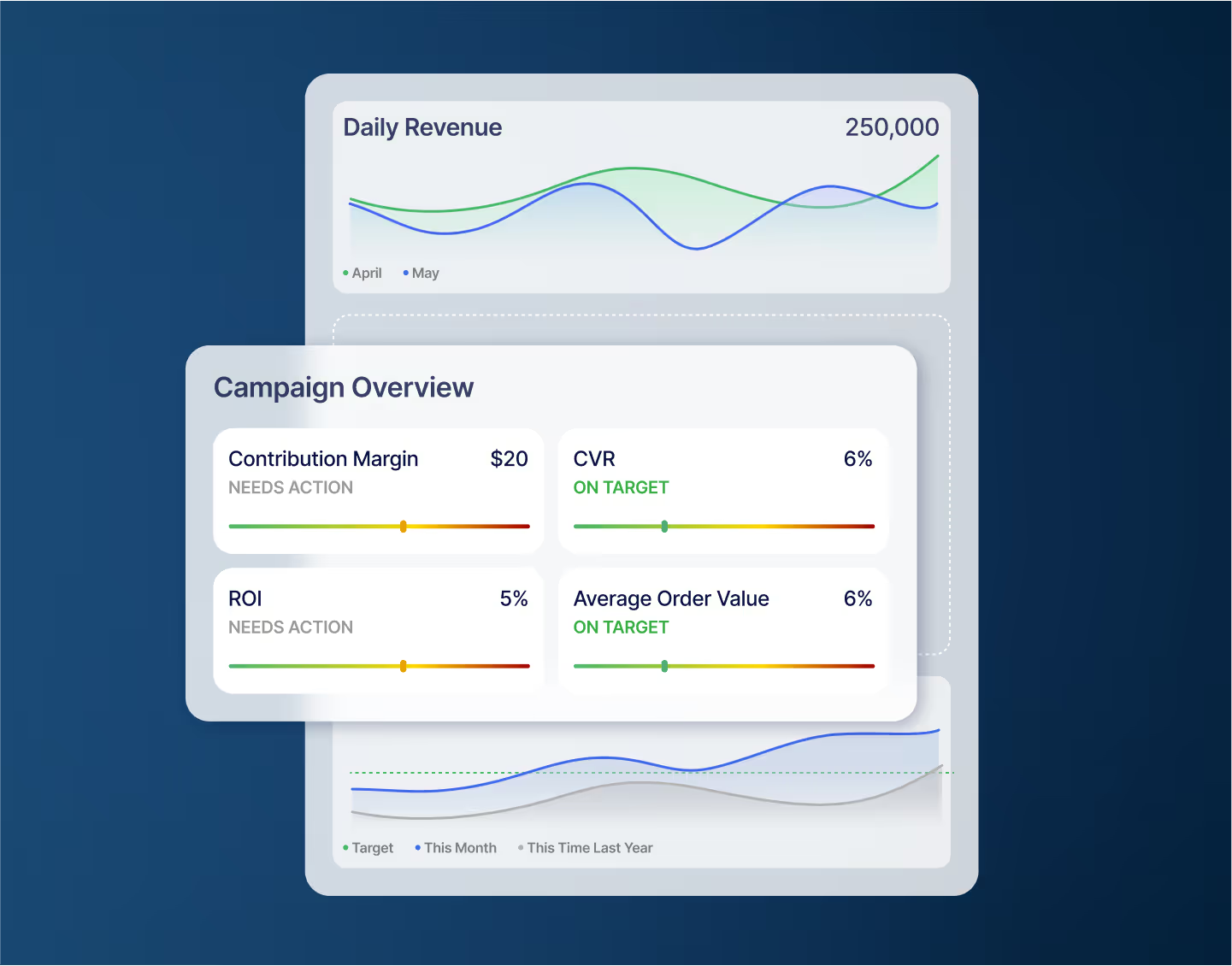
Conversion rate and contribution margin belong on the same scorecard as spend.
When should you fix your website first?
Fix the website first when the data shows visitors arriving with intent and leaving without acting. Common signals include:
Mobile converts far below desktop. Much of paid social traffic arrives on phones. A large gap usually points to page speed, layout, or checkout friction rather than targeting.
Paid landing pages lose people immediately. When engagement drops off in the first seconds, the page is not delivering what the ad promised.
Carts or forms are abandoned midway. Shipping costs revealed late, forced account creation, or long lead forms stop buyers who already decided to act.
Conversion rate fell while traffic quality held. A recent redesign, plugin, or pricing change may be the cause, and more budget will not reverse it.
Tracking is unreliable. If platform conversions and backend orders disagree widely, neither the budget decision nor the website decision can be evaluated.
In each case, the ad platform is doing its job by delivering visitors. Targeting can bring the right visitor to the door; the page has to close the sale.
When is increasing ad spend the better move?
Increasing ad spend is the better move when campaigns are profitable at the margin and constrained by budget rather than by demand or conversion. Signals include:
Campaigns are limited by budget. In Google Ads, a meaningful share of search impressions lost to budget means qualified people are searching and your ads are not showing.
CAC sits comfortably below your target. The target should come from your economics, not a platform benchmark. Knowing how to calculate contribution margin tells you how much you can spend to acquire a customer after COGS, shipping, discounts, and fees.
Conversion rate holds as spend rises. If a 20% budget test keeps conversion rate and CAC stable, the site can absorb more traffic.
Customers repeat or expand. Strong lifetime value can justify a higher first-order CAC, provided you measure it by cohort rather than assuming it.
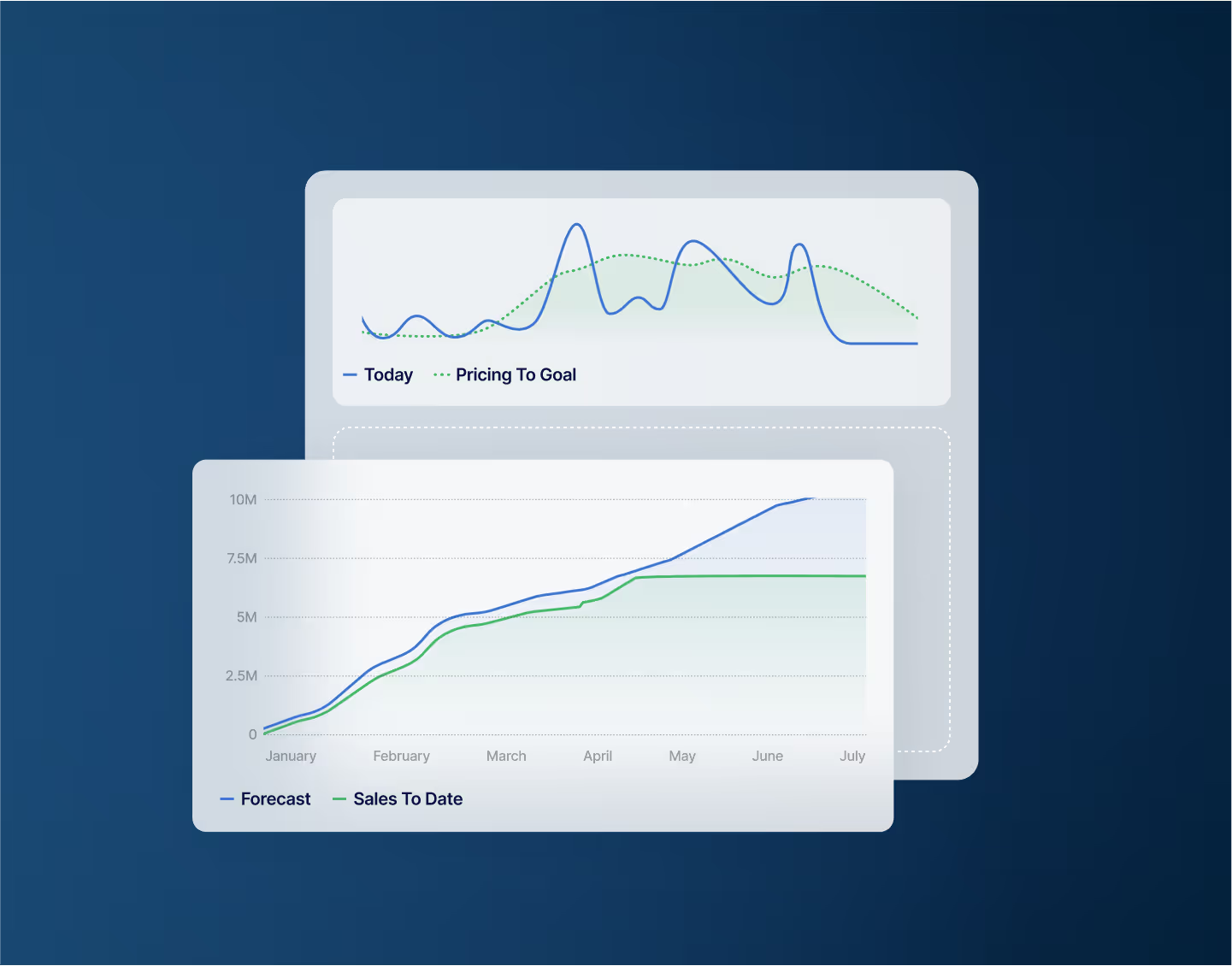
Forecasting against actual sales shows whether added spend is still earning its keep.
How do you decide with numbers instead of instinct?
Compare the marginal return of each option in contribution margin. A practical sequence:
Set a target CAC from margin. Start with contribution margin per order (or per customer, if repeat purchase is reliable). That is your ceiling for acquisition cost.
Measure current CAC on backend data. Use orders from Shopify, your CRM, or your payment processor, not platform-attributed conversions. Platforms often credit the same sale to more than one channel, which explains why ROAS can hide losses that margin reporting exposes.
Test the budget increase. Raise spend 15% to 25% on your best campaign for two to four weeks and calculate the CAC of the incremental customers alone.
Estimate the conversion fix. Size the leak you found, such as mobile checkout abandonment, and estimate the orders a realistic improvement would recover at current spend.
Choose the larger margin gain. Put the next dollar wherever it adds more contribution margin, then repeat the comparison next month.
For B2B and service businesses, swap orders for qualified opportunities or closed revenue. A form fill that never becomes pipeline is not a conversion worth scaling.
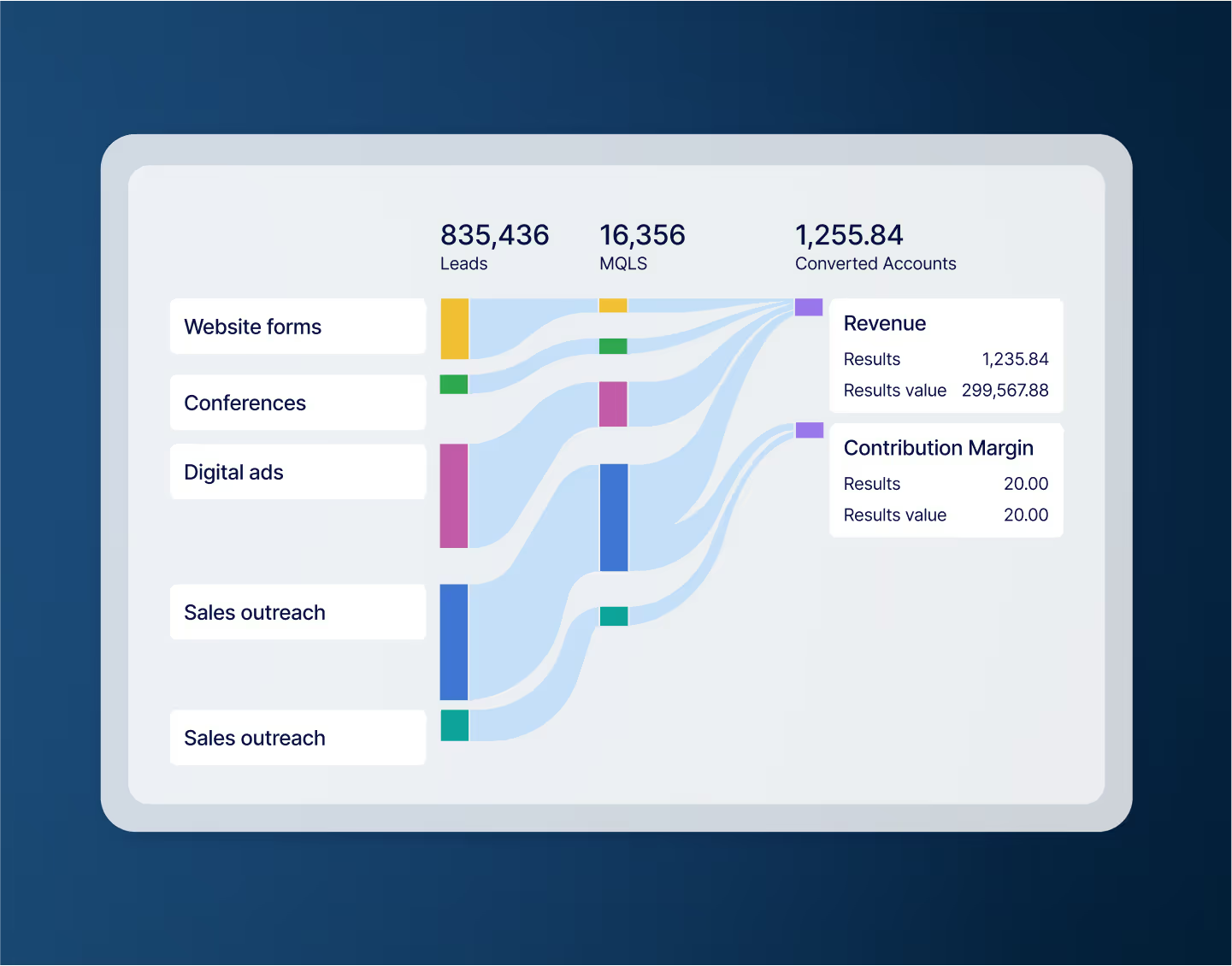
Tracing each source through to revenue and margin keeps the comparison honest.
What if you cannot trust the numbers?
Fix measurement before choosing between budget and website. If Meta, Google, and your store each report a different revenue figure, you cannot tell whether a site change worked or whether added spend paid off. Marketing data infrastructure that reconciles ad platforms, analytics, and backend orders turns this from a debate into a calculation.
Songfinch faced that gap. After its data was rebuilt to reconcile against Stripe, the team reached 99%+ backend reconciliation and gained contribution-margin visibility down to the ad set, as described in how Songfinch reached 99% data reconciliation.
Can you do both at once?
Often, yes, in sequence. Hold spend steady while you fix the biggest conversion leak, confirm the improvement in backend data, then scale into the better-converting site. Scaling only makes sense once CAC holds as spend grows. Blueprint, a health subscription brand, scaled ad spend 11x and lowered CAC 57%, shown in Blueprint's 11x growth without bloated fees. Results like that depend on each business's economics and are not typical of every account.
Frequently asked questions
What conversion rate is good enough to scale ad spend?
No universal rate exists. A conversion rate is good enough when it produces a CAC below the contribution margin you earn per customer, and stays there as spend increases.
How long should a budget test run?
Two to four weeks is a reasonable minimum for most accounts, long enough to get past platform learning periods and gather enough conversions to compare. Low-volume B2B accounts may need longer.
Should you pause ads while rebuilding the website?
Usually not. Keep spend steady so you have a baseline to measure the change against, unless something is broken outright, such as a failing checkout.
The bottom line
Budget amplifies your website. If the site leaks, scaling spend scales the leak. If the site converts profitably and campaigns are capped by budget, holding back leaves margin on the table. Decide with backend revenue and contribution margin, and revisit the answer as both change. If you want help sizing which lever matters more for your business, schedule a free audit to see where your next dollar belongs.








.svg)
