


© 2025 Onward. All rights reserved.
Designed by BX Studio


Paid social creative fatigue happens when the people in your audience have seen an ad often enough that it stops changing their behavior. You can spot it when frequency climbs while click-through rate falls and cost per result rises on the same ad, with nothing else changing. The fix is not simply "make new ads." It is a testing system that replaces tired hooks and angles before they drag down results, and that judges every new creative on backend outcomes such as qualified leads, orders, and contribution margin.
Key takeaways
Creative fatigue is the decline in an ad's performance as the same audience sees it repeatedly. On Meta, TikTok, and other social platforms, ads are delivered into feeds people scroll every day, so a strong ad can reach most of its likely responders quickly. After that, each additional impression goes to people who have already seen it and decided not to act.
Fatigue is a creative problem, but its cost shows up in the media budget. Spend that once bought new customers starts buying repeat impressions. That is why creative belongs inside the performance system rather than being treated as a branding deliverable.
Look for several of these signals on the same ad at the same time, over at least a week:
One signal alone is not proof. A falling click-through rate with stable frequency may point to targeting or placement changes instead. The clearest sign of fatigue is rising frequency paired with declining response from the same people.
Before replacing ads, rule out causes that have nothing to do with the creative:
If several ads in different campaigns decline at the same moment, the cause is probably outside the creative.
Match the fix to how far the ad has worn out.
The best prevention is a steady supply of tested creative, organized so you learn something from every test. Group ideas into a few creative pillars, such as product demonstration, customer story, objection handling, and offer. Treat each pillar as a hypothesis, test variations within it, and move budget toward the pillars that produce results.
Plan the cadence around spend. Larger budgets reach the same people faster, so they need new creative more often than small accounts do. Keep a backlog of ready-to-launch variations, so a fatigued ad can be replaced the same week rather than the next month.

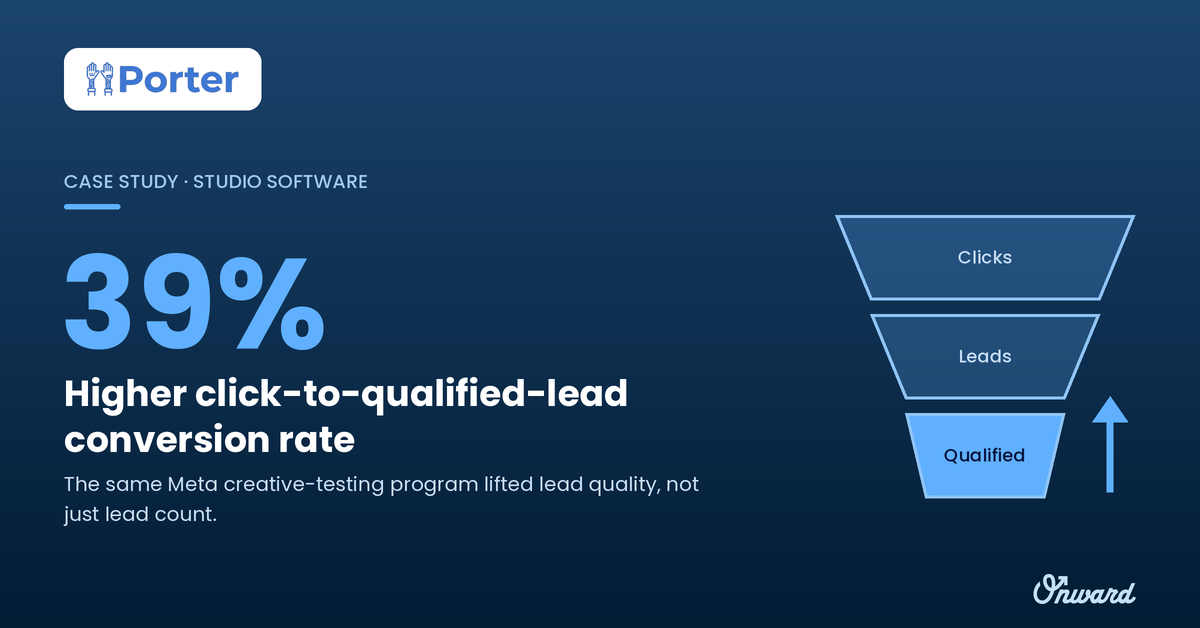
This is how Onward runs structured creative testing as part of its performance marketing services. For Porter, whose software serves more than 1,000 active studios, Onward began with a creative brainstorm to define content pillars, then built a Meta testing framework tied to backend qualification data. Porter's click-to-qualified-lead conversion rate rose 39%, and qualified studio volume grew 77% on 6% less total spend. The full approach is in the Meta creative testing case study.
Judge new ads on what the business records, not only on what the platform reports. A fresh ad with a high click-through rate can still attract buyers who return products, take steep discounts, or never become qualified leads.
A hypothetical example: Ad A has a 2% click-through rate and drives discounted first orders. Ad B has a 1.2% click-through rate and drives full-price orders of a higher-margin product. On platform metrics, Ad A wins. On contribution margin per order, Ad B may win easily. The comparison of why ROAS can hide losses explains why that gap matters for budget decisions.
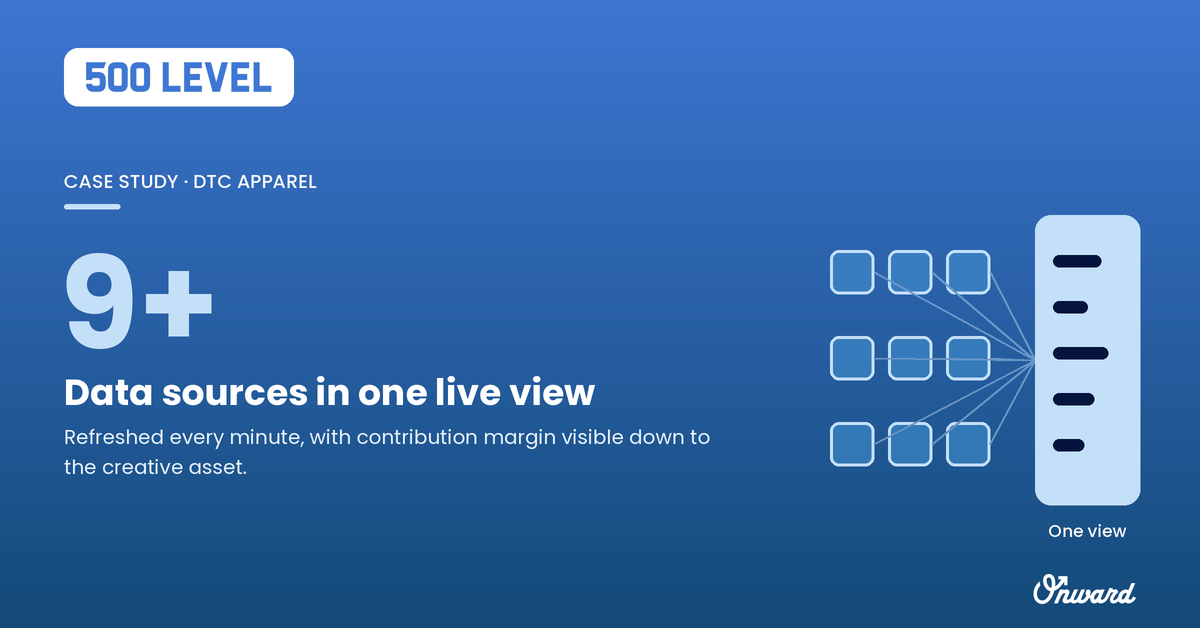
Seeing results at the creative level requires joining ad data with orders, CRM stages, and costs. 500 LEVEL, a licensed sports apparel brand, runs a continuous creative-testing engine timed to sports moments, with reporting that joins more than nine data sources and shows contribution margin down to the creative asset.
There is no universal schedule. Accounts with larger budgets and smaller audiences fatigue faster. Watch frequency, click-through rate, and cost per result together, and keep replacement creative ready before the signals turn.
They overlap. Creative fatigue is about a specific ad wearing out. Audience fatigue happens when an audience is too small for the spend, so even new ads reach the same people too often. The fix for the second is broader targeting, not only new creative.
Creative fatigue shows up as rising frequency, falling response, and rising cost on the same ad. Rule out auction, offer, and tracking changes, then refresh the hook, change the format, or test a new angle. Prevent it with a steady pipeline of tested creative, and judge every replacement on backend results. If you want a second opinion on your current creative and testing setup, talk to Onward's team.