


© 2025 Onward. All rights reserved.
Designed by BX Studio


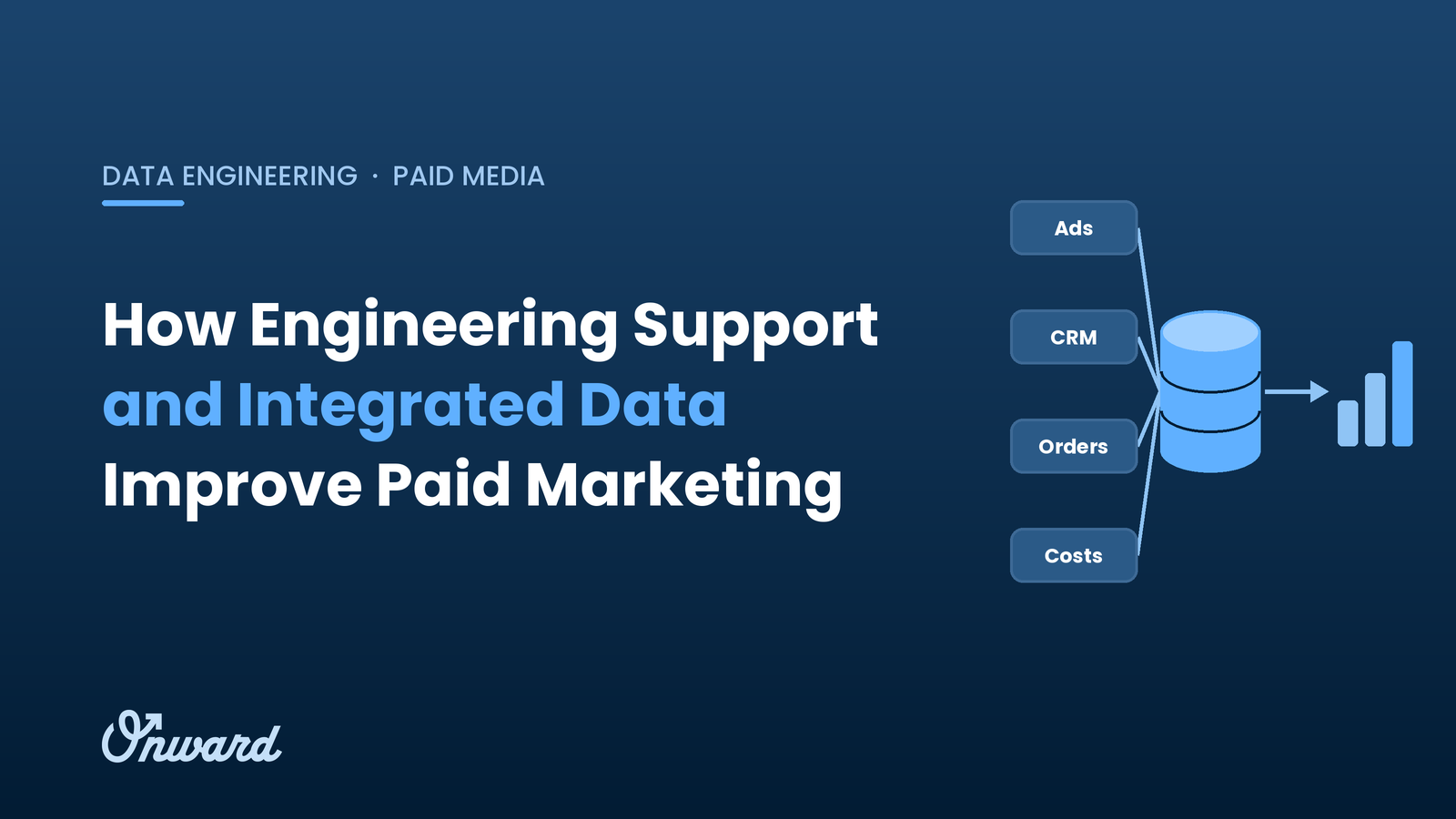
Engineering support improves paid marketing by fixing the inputs that every bid and budget decision depends on. Data engineers make conversion tracking accurate, join ad spend with revenue and cost data, and send real business outcomes back to ad platforms so their algorithms learn from qualified leads and profitable orders instead of clicks. Media buyers can only optimize what they can measure, so better data engineering usually shows up as better media decisions.
Key takeaways
Modern ad platforms run on automated bidding. Google, Meta, and LinkedIn decide who sees an ad and how much to bid based on the conversion data they receive. That makes tracking a performance lever, not a reporting detail. If a pixel double-counts purchases or a form sends every submission as a conversion, the platform will chase more of the wrong thing.
Most marketing teams cannot fix those problems themselves. Product engineers are busy with the product, and a request to repair a checkout event or build a CRM sync can wait weeks in a queue. Meanwhile, the media team keeps spending against numbers it does not fully trust. That is the gap Onward's engineered analytics service exists to close: dedicated data engineers working alongside the media buyers who use the data.
The work falls into five areas:
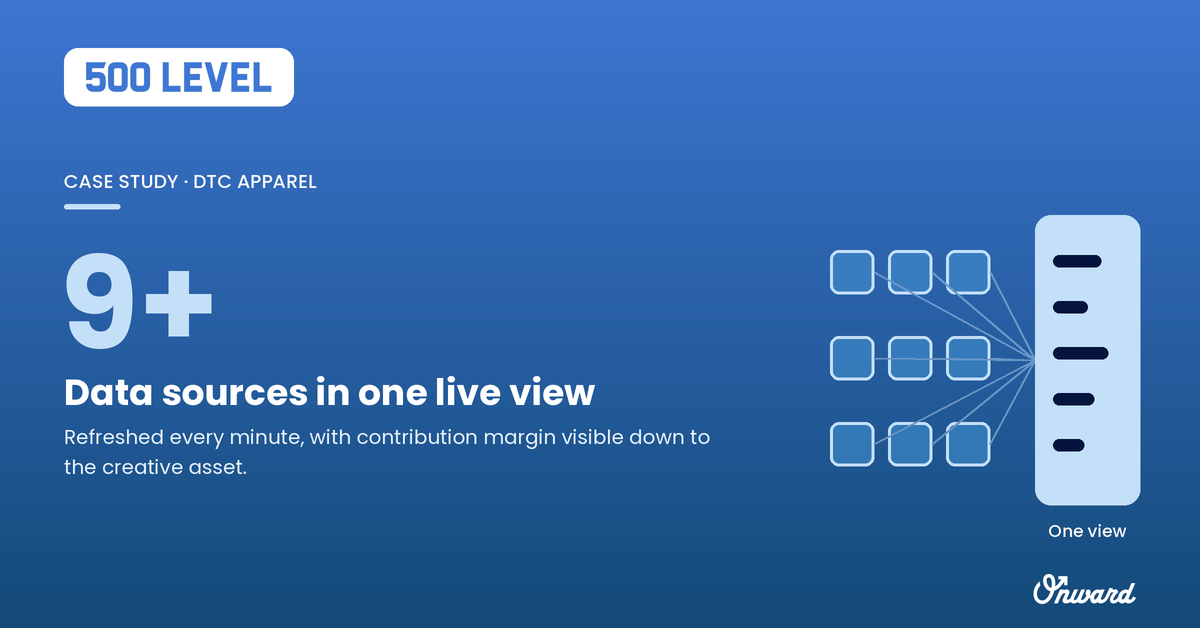
Onward's warehouse work connects more than 50 sources across ad platforms, CRMs, finance tools, and product analytics, with data refreshed automatically each day. For the sports apparel retailer 500 LEVEL, that work pulls more than nine sources into a single live view, so the team can read margin for each individual creative.
A hypothetical example: a B2B software company runs LinkedIn and Google campaigns that each report a similar cost per lead. After an engineer connects the CRM, the team can see that one campaign's leads become sales-qualified at three times the rate of the other's. On cost per lead, the two looked equal. On cost per qualified lead, one is clearly better, and budget moves accordingly. This is the kind of reporting behind paid media tied to qualified pipeline.
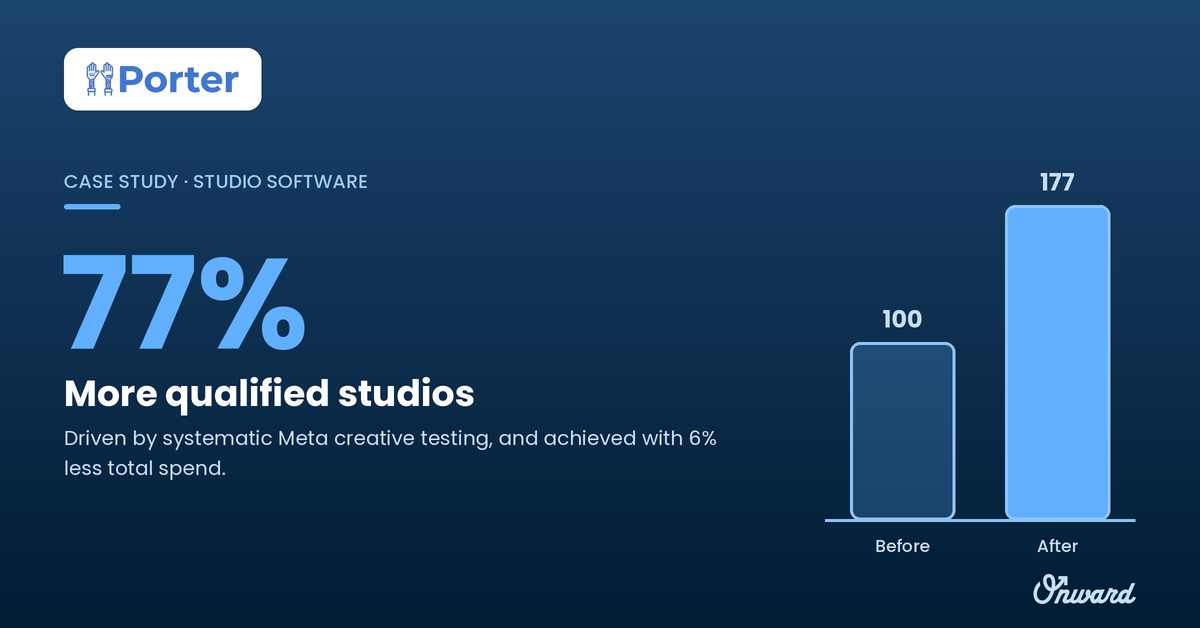
Porter, which makes studio management software, shows what this looks like in practice. Onward tied Porter's Meta creative testing to backend qualification data rather than form fills. Porter ended up with 77% more qualified studios while total spend fell 6%, as described in the case study on 77% more qualified leads from creative testing.
Ecommerce brands see the same effect with costs. When product costs, shipping, discounts, and returns sit next to ad spend, a campaign that looks strong on revenue can turn out to be selling mostly low-margin products.
Integrated data pays off most when it flows back into bidding. Three common methods:
Each method needs clean identifiers, consistent CRM stages, and deduplication, which is engineering work. If you are weighing outside help for this, the guide to connecting ad clicks to closed-won revenue explains what to look for in a partner.
Beyond better bidding, engineering support removes manual work. Teams without pipelines often spend hours each week exporting platform reports, fixing column names, and reconciling totals. Automating that work frees analysts and media buyers to spend their time on decisions.
Agora, a ticket reselling business, automated manual spreadsheet work and centralized its inventory data, saving 150 hours a month and $35,000 a year. The details are in the data automation case study.

There are three common routes, and each fits a different situation:
Onward takes the third approach: its paid media management pairs senior media buyers with data engineers on each account, under a flat monthly fee.
With account access sorted, Onward usually has first dashboards running in two to four weeks. Bidding improvements from new conversion signals take longer, because platforms need time to learn from the new data.
Not on day one. Fixing conversion tracking and importing qualified outcomes can come first. A warehouse becomes important once you want spend, revenue, and costs in one view across several platforms.
Paid marketing performance depends on data quality more than most teams realize. Engineering support makes tracking accurate, joins spend with revenue and costs, and feeds real outcomes back into bidding. If your media team is making decisions on numbers it does not trust, book a discovery call.