


© 2025 Onward. All rights reserved.
Designed by BX Studio


A luxury villa marketing strategy that generates more direct bookings does three things in order. It makes the villa's own website the easiest place to book, it builds channels that send high-intent guests to that website, and it measures confirmed bookings by source so the owner knows which channels to fund. Marketplaces still have a role, but as a way to fill gaps rather than the foundation of the business.
Most villas already have pieces of this in place. The gap is usually that the pieces are not connected, so nobody can say which of them produced last season's revenue.
A marketplace listing and a direct booking engine solve different problems. Airbnb or Vrbo supplies the traffic and handles trust, and charges a commission on every stay in exchange. A direct strategy asks the villa to supply its own demand and earn the guest's trust without a platform's reviews and guarantees.
That is why direct bookings rarely grow from a single tactic. Running Google and Meta ads management without a strong website wastes spend. Publishing content without tracking where bookings come from leaves the owner guessing. The six steps below work as a system.
A luxury villa does not need every traveler. It needs the 15 to 30 groups a year whose plans fit the property. Start by writing down who books well: multigenerational families, wedding parties, milestone birthdays, or corporate retreats.
Then list the questions each group asks before booking. A wedding planner wants to know guest capacity, event permits, and catering. A family wants to know about pool safety, chef service, and airport transfers. Each question is a potential page, and each page is a chance to be found by the right guest.
A villa website earns direct bookings when it answers a serious guest's questions faster and more completely than a marketplace listing does. That means bedroom and bed configurations, maximum guests, what staff is included, what costs extra, a realistic rate range, and a live availability calendar.
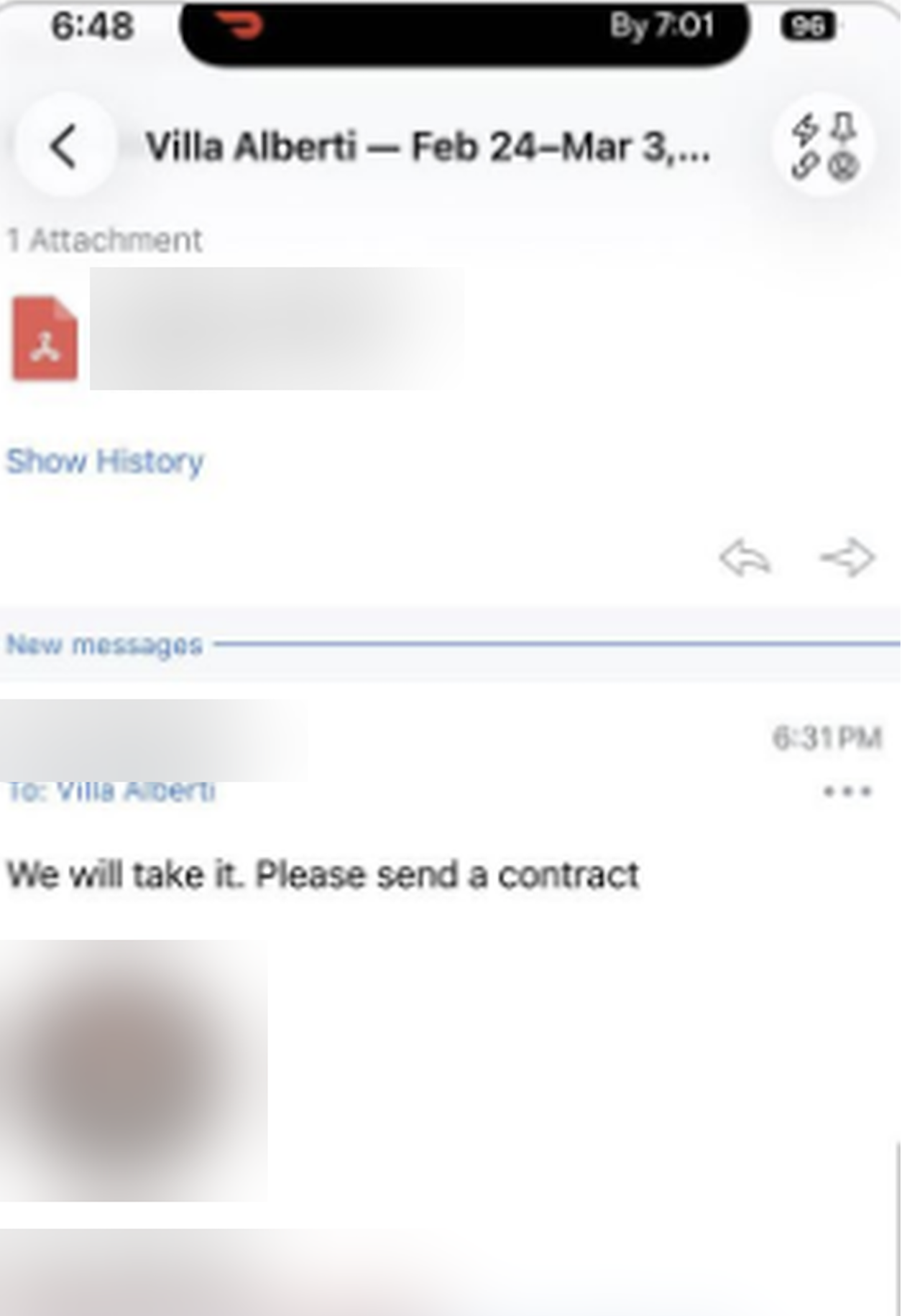
Speed matters after the inquiry too. A guest planning a $40,000 week may be comparing several properties at once. The villa that replies first with a clear quote, a sample itinerary, and a contract ready to sign has a real advantage.
Guests planning a group trip now often type the whole brief into an AI assistant: dates, headcount, budget, and must-haves. Tools such as Perplexity, ChatGPT, and Google AI Mode reply with a short list of named properties. Answer engine optimization (AEO) is the practice of publishing clear, specific, well-structured content so a property is included in those answers.
.png)
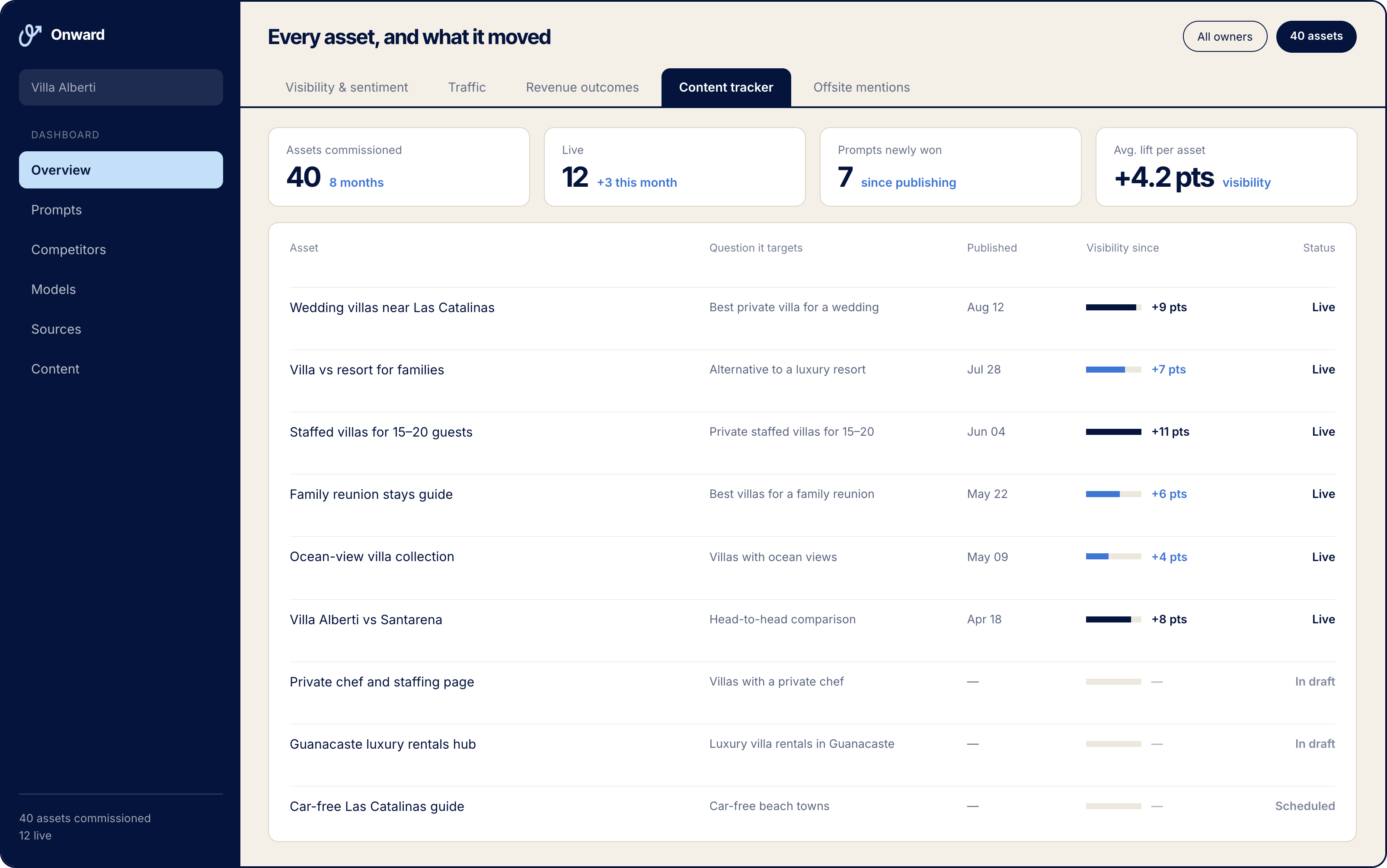
Villa Alberti in Costa Rica shows what this can look like. Between late February and September, the villa published 60 articles answering booking-intent questions. From March 1 through September 9, AEO blog content accounted for 34% to 43% of the site's sessions, and a single guest who found the villa through a Perplexity answer booked more than $100,000. Read how a luxury villa won AI search visibility for the full timeline. Results vary by property, market, and starting point.
The work behind those results has three parts: content written around real guest questions, technical cleanup so AI crawlers can read the site, and weekly tracking of which prompts name the villa. Owners who want that handled end to end can look at answer engine optimization services built for high-ticket brands.
Owners doing this in-house can start with an AEO and GEO audit checklist. Onward's piece on AI search for luxury vacation rentals explains how the content connects to bookings.
Paid media is the fastest lever in a direct booking strategy, and also the easiest to waste. For most villas, the strongest uses are:
Broad awareness campaigns can work for well-funded properties, but they are hard to connect to bookings with a long research window. Judge every campaign on confirmed bookings, not inquiries or clicks.
A guest who books direct leaves behind an email address and a relationship. Use both. Offer returning guests early access to next year's calendar, ask them for referrals, and keep in touch with a few useful messages a year rather than a weekly newsletter.
Repeat and referred bookings carry little or no acquisition cost, which lowers the average cost of every booking in the strategy. Offering past guests the calendar first also locks in dates early, which gives the owner more time to market the weeks that remain open.
A direct booking strategy is measured by one number above all: confirmed stays and the revenue each source produced. Visits, rankings, and AI mentions are useful signals, but they are not the outcome.

In practice, that means tagging every link and campaign, recording the source on each inquiry, asking guests how they found the villa, and reconciling all of it against the reservation system. Full-funnel measurement and dashboards bring ad spend, site analytics, inquiries, and bookings into one view so the owner can compare channels on the same basis.
Paid search on branded and high-intent queries can produce inquiries within weeks. Content and AI visibility take longer. Villa Alberti's visibility climbed over roughly seven months, and organic results generally compound over seasons rather than arriving all at once. Running both at once lets the faster channel cover the calendar while the slower one builds.
More direct bookings come from a connected system, not a single campaign. Know the guest, build a website that closes them, get found where they research, spend on demand that already exists, keep past guests close, and measure every channel by the bookings it produces.
For owners who want an outside view of where their direct bookings are coming from today, schedule a free audit with Onward.


.svg)
