


© 2025 Onward. All rights reserved.
Designed by BX Studio


A qualified lead is a person who fits the kind of customer your business serves profitably, has a need you can solve, and is able and ready to buy within a reasonable time. There is no universal definition. A plumber, an accountant, and a wedding venue will each qualify leads differently, so the most useful step is to write down three to five yes-or-no criteria that match your best customers and score every lead against them.
Key takeaways
A lead is any inquiry: a form fill, a call, a chat, or a booking request. A qualified lead is the subset of those inquiries that match your criteria for a realistic sale. A customer is a qualified lead who bought.
The gap between those three numbers is where small business marketing budgets get lost. A hypothetical example: Campaign A produces 100 leads at $20 each, but only 3 turn out to be real prospects. Campaign B produces 30 leads at $50 each, and 10 are real prospects. Campaign A looks two and a half times as efficient on cost per lead. On cost per qualified lead, it costs about $667 against Campaign B's $150. Judging campaigns on lead volume would move budget in the wrong direction.
That distinction is central to how Onward runs paid search and paid social management: campaigns are judged on the leads and customers they produce, not on the number of forms submitted.
Most small businesses can qualify a lead with some version of five checks:
You do not need all five. Pick the ones that most often separate customers from time-wasters in your business.
The same five checks produce very different definitions depending on the business:
Start from evidence, not instinct.
Give every lead a row in a CRM or even a shared spreadsheet with five fields: date, source (which ad, search, referral, or channel), qualified yes or no, won yes or no, and revenue. That simple record answers the questions ad dashboards cannot.
From it you can calculate the numbers that matter most:
Google and Meta optimize toward whatever you report as a conversion. If every form fill counts equally, the platforms will look for more people who fill out forms, whether or not they ever buy.
Both platforms let you send later outcomes back. Google Ads supports offline conversion imports: you store the Google Click ID (GCLID) captured with each lead, then upload the lead's status when it qualifies or closes. Google's enhanced conversions for leads add hashed first-party data, such as email addresses, to that import, and Google reports a median 10% increase in measured conversions for advertisers who added it alongside GCLIDs. The setup of sending CRM stages back to Google Ads covers how this usually works in practice.
Small businesses with low lead volume should be patient here. Bidding systems need enough conversions to learn from, so some businesses report a mid-funnel stage, such as qualified, alongside closed sales rather than closed sales alone.
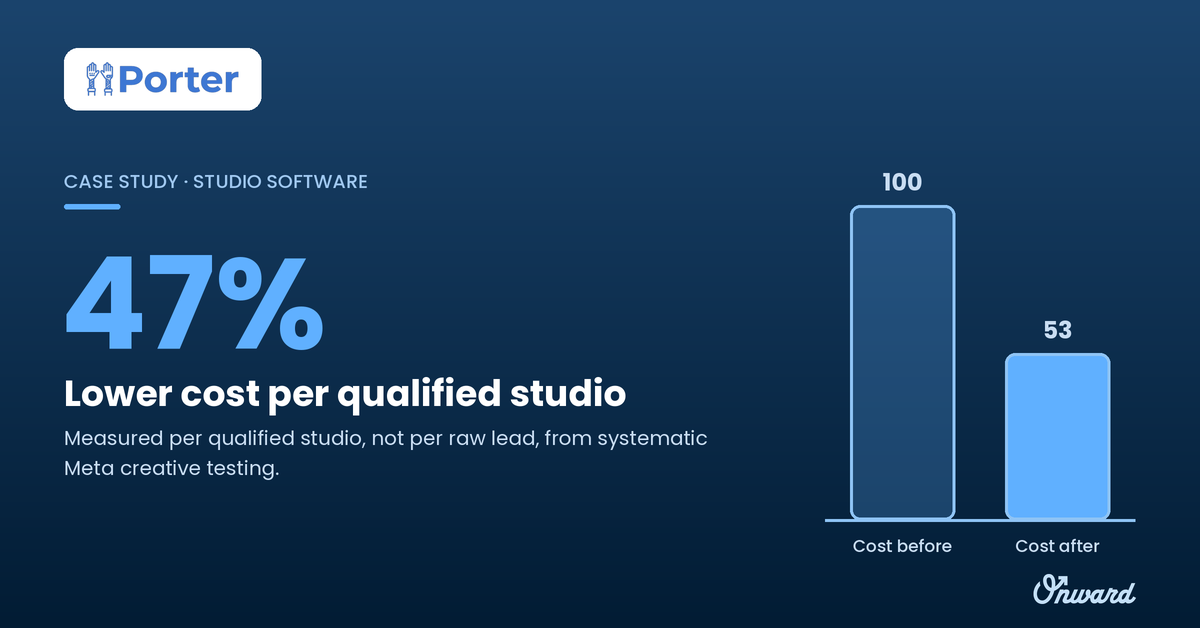
Judging campaigns on qualified outcomes changes which ads, audiences, and offers look like winners. Porter, a software company serving studios, ran structured Meta creative testing with dashboards tied to backend qualification data. The result was 77% more qualified studios, a 47% lower cost per qualified studio, and a 39% higher rate of clicks turning into qualified leads, on 6% less total spend. Read how the testing was structured in the case study on systematic creative testing for Porter.
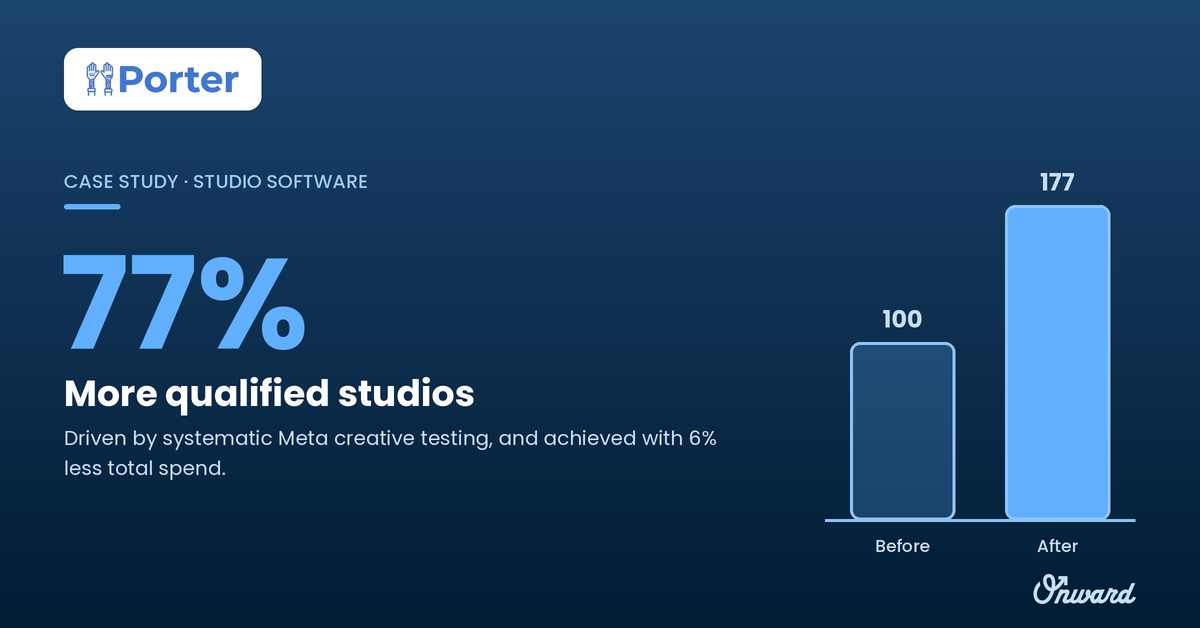
Results like Porter's depend on the business and the data behind it. The principle carries over to any small business: decide what a good lead is, measure it, and let that number guide spend. Combining ad data with CRM outcomes is the core of data integration for paid media ROI.
Then the problem is probably after the lead, not before it. Check how quickly inquiries get a response, whether calls go to voicemail, and whether quotes follow a consistent process. A strong definition of a qualified lead also makes this visible: if qualified leads are rising but close rates are falling, marketing is doing its part and the sales process needs attention.

A qualified lead is whatever your best customers looked like before they bought. Write that down as a short set of yes-or-no criteria, track every lead against it, measure cost per qualified lead by channel, and tell your ad platforms which leads met the bar. If you want help setting up that measurement, book a discovery call.