



© 2025 Onward. All rights reserved.
Designed by BX Studio


Most small businesses should prioritize the channel that matches how their customers already search and how quickly they need revenue. Paid ads come first when you need customers this quarter and can afford the acquisition cost. SEO comes first when you have time but limited cash. AI search visibility moves up the list when you sell a high-consideration product or service that buyers research by asking ChatGPT, Gemini, or Google's AI answers for recommendations.
These are not three competing bets. They share a foundation, and the order you build them in matters more than picking one forever.
The three channels differ in speed, cost structure, and what you own when you stop investing.
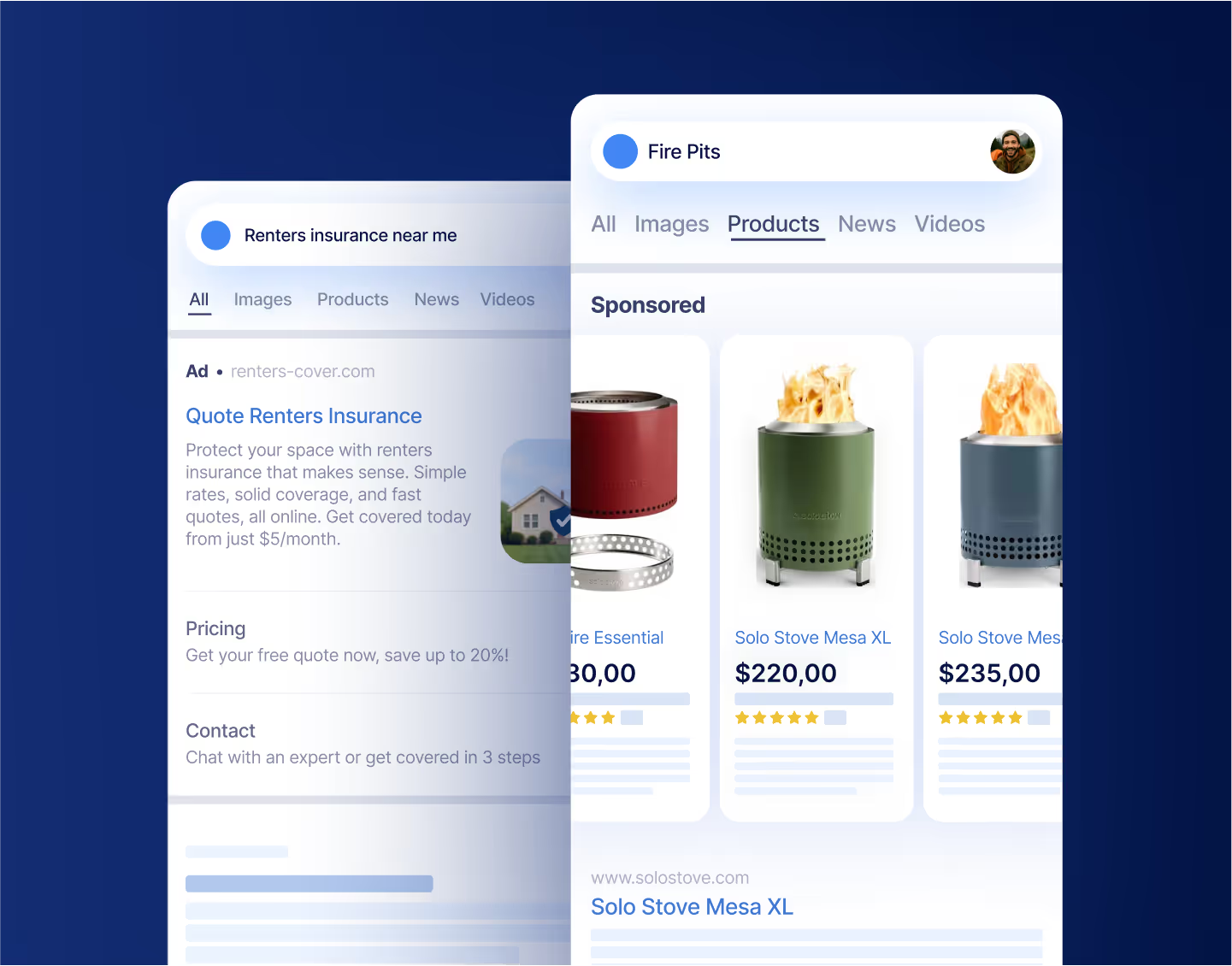
Paid ads should come first when the business needs predictable volume soon and already has an offer that converts. Search ads in particular capture people who are actively looking, such as someone typing "emergency plumber near me" or "bookkeeping for restaurants."
The risk is paying for clicks the business cannot afford. Before scaling, know what a customer is worth after costs and set a maximum acquisition cost from that number. Campaigns should optimize toward that ceiling rather than toward cheap clicks or platform-reported conversions.
Paid campaigns also produce something SEO and AI search cannot produce quickly: data. Within weeks, the search terms report shows which phrases bring buyers and which bring browsers. That list becomes the content plan for the other two channels.
SEO should come first when cash is tight, the sales cycle allows patience, and customers search for answers before they search for vendors. A landscaping company that publishes clear pages on drought-tolerant lawns, pricing ranges, and seasonal timing can collect qualified visitors for years from work done once.
For most small businesses, the SEO priorities are unglamorous: fast mobile pages, one strong page per core service, accurate business details everywhere they appear, and content that answers the questions your sales team hears every week. An SEO strategy with engineered analytics also tracks which organic pages produce customers, not just traffic, so effort goes to the topics that pay.
AI search visibility moves up the list when the purchase is expensive, infrequent, or trust-dependent. Think wedding venues, luxury rentals, specialized B2B services, or medical practices. Buyers in these categories often ask an assistant to compare options, and the assistant answers with a short list of names.
If your business is not on that list, you may never get the chance to compete on your website. Onward's AEO services for high-ticket brands start by tracking a set of real buyer prompts across AI platforms to see where a brand is named, where competitors are named instead, and which sources the assistants cite.

The results can be concrete. Villa Alberti, a luxury villa rental, went from near-invisible in AI answers to $100K+ in booking revenue, with AI visibility rising from 0.83% in February to 12.86% in September across 58 booking-intent prompts tracked weekly. The details are in how a luxury villa won AI search visibility.
Paid ads, SEO, and AI search visibility reinforce each other when they are built on the same foundation:

Split the budget by time horizon, then rebalance based on results. A hypothetical example, for illustration: a home services company with $6,000 a month might put most of it into paid search for high-intent local terms, a smaller share into service pages and SEO fixes, and a modest amount into publishing answer-first content that also supports AI visibility. After three months, the team compares cost per customer by channel and moves money toward what works.
The key is judging every channel on profit rather than activity. Tracking profit instead of clicks keeps a slow-building channel from being cut too early and keeps an expensive one from running unchecked.
No. AI assistants draw heavily on web content that is crawlable, well-structured, and trusted, which is what SEO builds. AEO adds prompt tracking and answer formatting on top of SEO fundamentals rather than replacing them.
Partly. Referral visits from AI platforms often appear in website analytics, and a tracked set of buyer prompts shows how often an assistant names your business. Mentions do not always produce a click, so pair visibility tracking with booking or sales data.
Not automatically. Compare the cost per customer of each channel. Many businesses keep paid search on their most valuable terms even after ranking organically, because the two placements can capture different clicks.
Start with the channel that matches your timeline and your customers' research habits, then build the others on the same foundation. Paid ads buy speed, SEO builds an asset, and AI search visibility protects your place on the shortlist. If you want help deciding where your first dollar should go, book a discovery call to talk it through.


.svg)
