


© 2025 Onward. All rights reserved.
Designed by BX Studio


An agency that runs paid media, SEO, and AEO under one roof is worth hiring when the three disciplines share data, not just a contract. The right partner uses paid search terms to shape organic content, tracks how often AI assistants name your brand, and judges every channel against the same backend revenue. Evaluate candidates on shared measurement, real depth in each discipline, proof from all three channels, and a fee model that does not reward spending more.
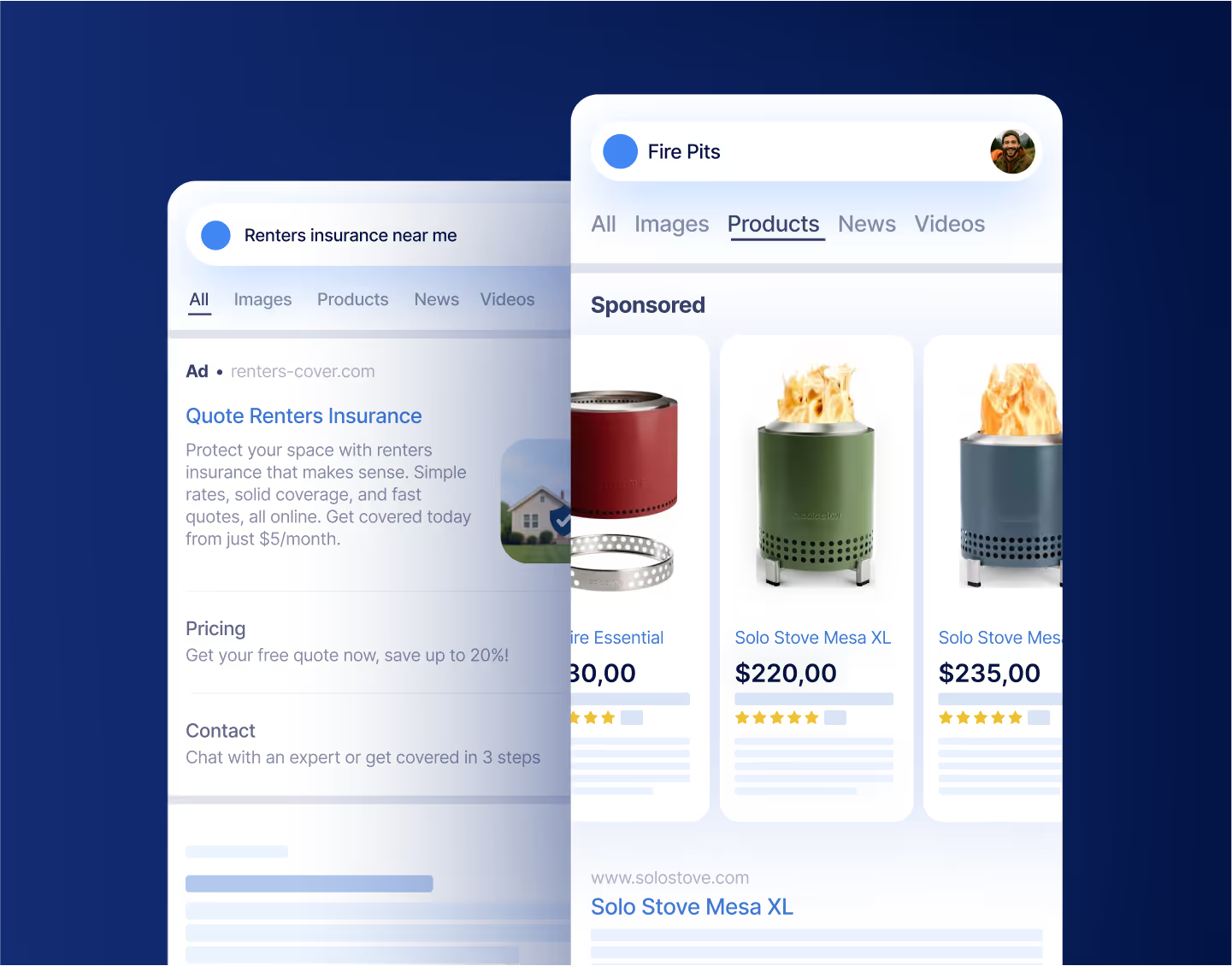
Paid media, SEO, and AEO compete for the same buyer at the same moment of research. A shopper might see a sponsored listing, an organic result, and an AI Overview on one search page, then ask ChatGPT the same question an hour later. When three vendors manage those touchpoints, each optimizes its own slice and claims credit for the same customer.
One partner can connect the pieces. Search terms that convert in paid media management show which topics deserve organic pages. Organic and AI visibility on branded queries can justify lower bids on brand terms. And one measurement layer shows what each channel adds, rather than three reports that overlap.
As of October 2026, Google shows AI Overviews and offers AI Mode in search, and assistants such as ChatGPT, Perplexity, Gemini, and Claude answer buying questions directly. That shifts part of discovery from a list of links to a short list of named brands. SEO still matters, because AI systems draw on pages that search engines can crawl and trust, but ranking alone no longer tells you whether buyers hear your name.
For a buyer, the practical change is in measurement. An integrated agency should report three kinds of visibility side by side: paid impression share, organic rankings and traffic, and how often your brand appears in AI answers to the questions customers actually ask.
Score every candidate on the same five criteria.
Ask how the agency attributes revenue across paid, organic, and AI-referred traffic, and whether it reconciles to orders in your store, CRM, or payment records. If each channel reports from its own platform, integration ends at the invoice.
Ask for the person who leads each channel and how long they have done that work. A strong paid team paired with one generalist writing SEO content is a gap worth testing for, and it tends to show up within a quarter.
Ask which prompts they will track, on which AI platforms, how often, and how they will report change over time. Good answers include a baseline, a stable list of buyer questions, and results broken out by platform.
Ask for a case study in each discipline, ideally with the same client. Dates, baselines, and named clients separate evidence from marketing.
Ask how fees change when ad spend rises. Fees tied to a share of ad spend rise with the paid budget even if organic and AI work is doing more of the lifting, which explains why flat-fee agencies align incentives better across three services.
Contract and onboarding topics are covered in these questions to ask a digital marketing agency.
Separate specialists can outperform an integrated agency when one channel dominates your growth and needs the deepest possible expertise, such as a marketplace-heavy brand where retail media is most of the budget. They also make sense when you already have an in-house lead who coordinates vendors and owns a shared revenue dashboard.
If you go that route, make the coordination explicit: one shared keyword and prompt list, one revenue source, and a monthly meeting where all three vendors review results together.
Onward offers SEO and AEO next to its search, social, and retail media ad management, and its data engineers tie all of them to backend revenue. Senior media buyers lead the paid work, Onward bills a single flat fee each month, and nothing in that fee scales with ad spend.
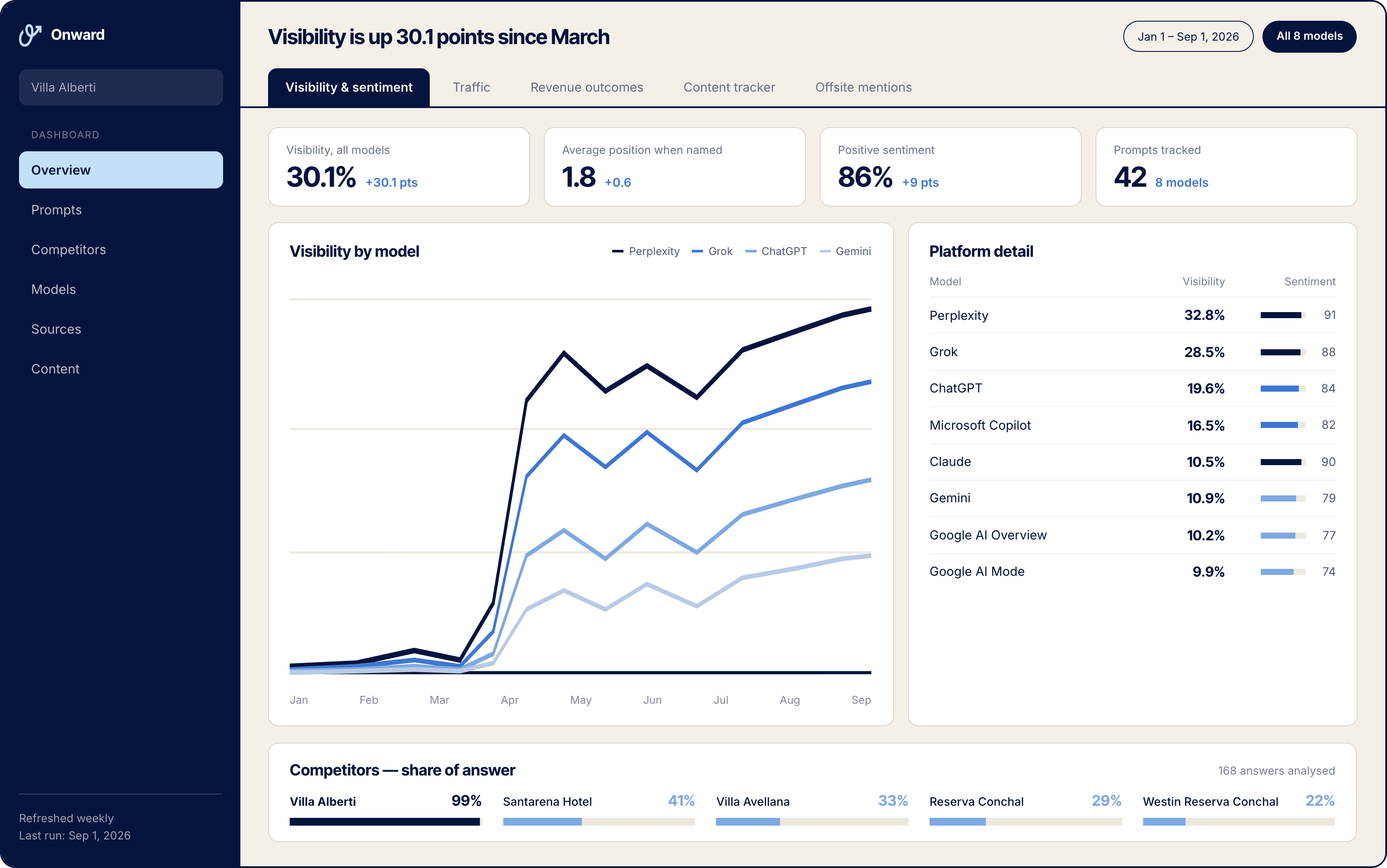
For AI visibility, Onward starts with a free audit covering eight assistants and AI search surfaces, with ChatGPT and Google's AI Mode among them, as part of its AI search visibility services. Villa Alberti, a privately owned Costa Rican villa, followed 58 questions a guest might ask before booking. Its AI visibility rose from under 1% to nearly 13%, and the program produced $100K+ in bookings from AI answers.

They overlap but are not identical. SEO earns rankings and clicks, while AEO focuses on being named and described accurately in AI answers. The same technical and content work supports both, but AEO needs its own tracking.
It can be if the agency is thin in one area. The risk drops when each discipline has a named, experienced lead and all three report against the same revenue data.
An integrated agency earns its place when paid media, SEO, and AEO share data and answer to the same revenue number. Test for shared measurement, depth in each channel, a real AEO method, proof, and aligned fees. To see where your brand stands across all three today, schedule a free audit.