


© 2025 Onward. All rights reserved.
Designed by BX Studio


TikTok ads earn budget for a DTC brand when the product sells well on video, the team can produce new creative every week, tracking is sending reliable conversion data, and core channels are already profitable. Judge TikTok on what your backend shows: new customers, blended CAC, and contribution margin after returns. Platform-reported ROAS tends to flatter it, especially when view-through conversions are counted, so test against a holdout before scaling.
TikTok earns budget when several of these conditions are true at once:
Categories such as beauty, apparel, and accessories often fit this profile, which is why paid media for beauty brands treats short-form video as a core channel rather than an experiment.
Hold off when the product needs long explanation, when margins cannot absorb a higher customer acquisition cost during testing, or when there is no one to make new videos every week. Also wait if conversion tracking is unreliable on your existing channels. A new platform adds another set of self-reported numbers, and without a clean backend view you cannot tell whether it is adding customers or claiming ones you already had.
Creative is the main performance variable on TikTok. Ads that look like native posts, filmed vertically with a clear hook in the first seconds, often outperform polished brand spots. Plan for a pipeline of new concepts, creator content, and variations, and retire ads as performance fades. Spark Ads, which TikTok describes as a format that lets you use organic TikTok posts in your advertising, are one way to put creator and brand posts behind paid spend.
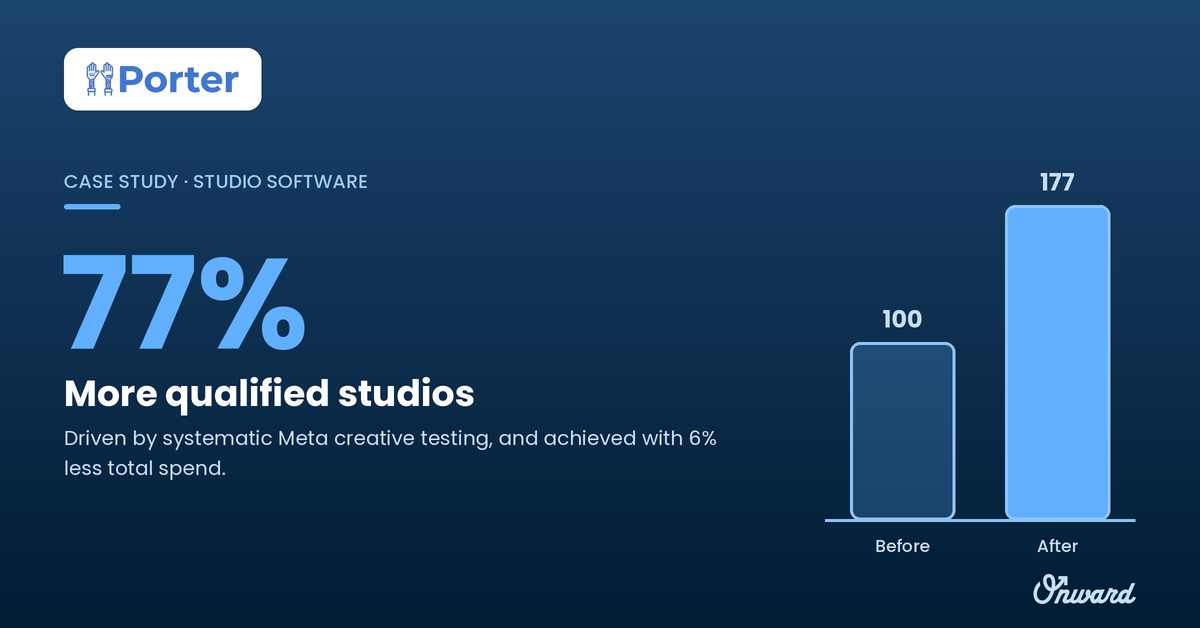
Structured testing matters as much on TikTok as on Meta. Porter, a studio software company, ran systematic Meta creative tests and grew qualified studios 77%, a result laid out in systematic creative testing for Porter. The same discipline of one variable per test and clear success metrics applies to TikTok.
Install the TikTok Pixel and the Events API, which TikTok describes as a more reliable server connection, so conversions are sent from both browser and server. Confirm purchase values match your store before spending at scale, turn on advanced matching where your privacy policy allows it, and compare TikTok-reported purchases with store orders weekly during the first month.
As of October 2026, TikTok's budget guidance for purchase-optimized campaigns suggests a daily budget of at least 10 times your current cost per acquisition, or $200 a day when you have no CPA yet. A budget far below that rarely produces enough conversions to judge anything. TikTok also offers Smart+ campaigns, which it describes as AI-powered campaigns for website conversion goals, and these can reduce setup work for small teams.
Judge TikTok by what changes in your business, not by what TikTok reports. Platform numbers are useful for comparing ads within TikTok, but they include modeled and view-through conversions that may have happened anyway.
A hypothetical example: TikTok reports a 3.2x ROAS on $30,000 of spend. Backend data shows 280 new customers in the test regions against 220 in the holdout, so about 60 incremental customers in the test. If each new customer earns $140 in first-order contribution margin, the incremental margin is about $8,400 against $30,000 spent. That gap is a reason to fix creative or targeting before scaling, and to check repeat purchase value. For why platform ROAS and real profit drift apart, see contribution margin vs. ROAS.
Lifetime value changes the math. A channel that brings customers who reorder can carry a higher acquisition cost on the first order. Caroline Myss grew new customers 200% by connecting LTV insights to clean data, as the story of growth through LTV and clean data shows.

Onward manages TikTok next to Meta and Google within its performance marketing services, with creative testing on a fixed cadence and results judged against backend new customers and contribution margin.
Much of the earlier uncertainty eased when TikTok finalized a joint venture for its US operations in January 2026, which removed the threat of a US ban. As with any platform, avoid depending on one channel for most of your new customers.
Usually not at first. Fund the test from a defined slice of budget, keep Meta and Google steady, and shift money only after a holdout shows TikTok adds customers at an acceptable margin.
Long enough to collect stable conversion volume and compare against a holdout, usually several weeks. Judge creative after a few days, but judge the channel on a month or more of backend data.
TikTok earns budget when the product suits video, the creative pipeline is ready, and backend data can show whether it adds profitable new customers. To plan a TikTok test around your own numbers, talk to Onward's team.